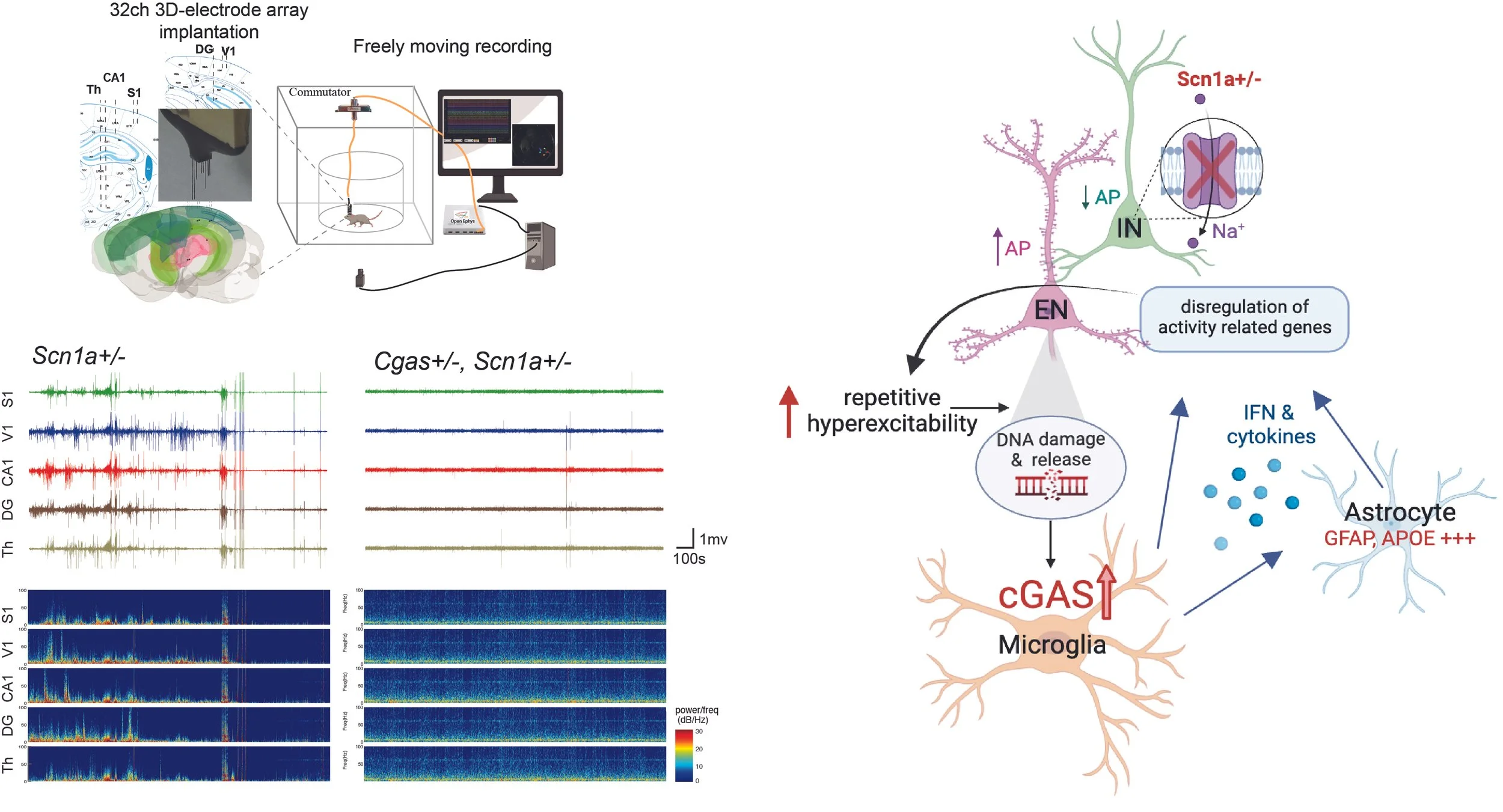
cGAS-mediated type I IFN signaling contributes to disease progression in drug-refractory epilepsy
Nature Neuroscience, 2026
Drug-refractory epilepsy (DRE) affects roughly one-third of epilepsy patients. We examined brain tissue from individuals with this condition and found robust activation of cGAS, a DNA sensor that triggers type I interferon signaling, along with widespread type-I IFN signatures in their microglia. We observed the same cGAS pathway activation in mouse models of Dravet syndrome, a genetic form of DRE. Notably, hyperexcitable neurons release DNA that directly activates microglial cGAS. When we genetically reduced or pharmacologically blocked cGAS in Dravet syndrome mice, seizures diminished, microglial inflammatory signatures normalized, and neuronal gene expression patterns returned toward healthy levels. These findings establish cGAS-mediated neuroimmune signaling as a driver of seizure pathology and identify this pathway as a compelling therapeutic target for drug-refractory epilepsy.
To read more, click here.
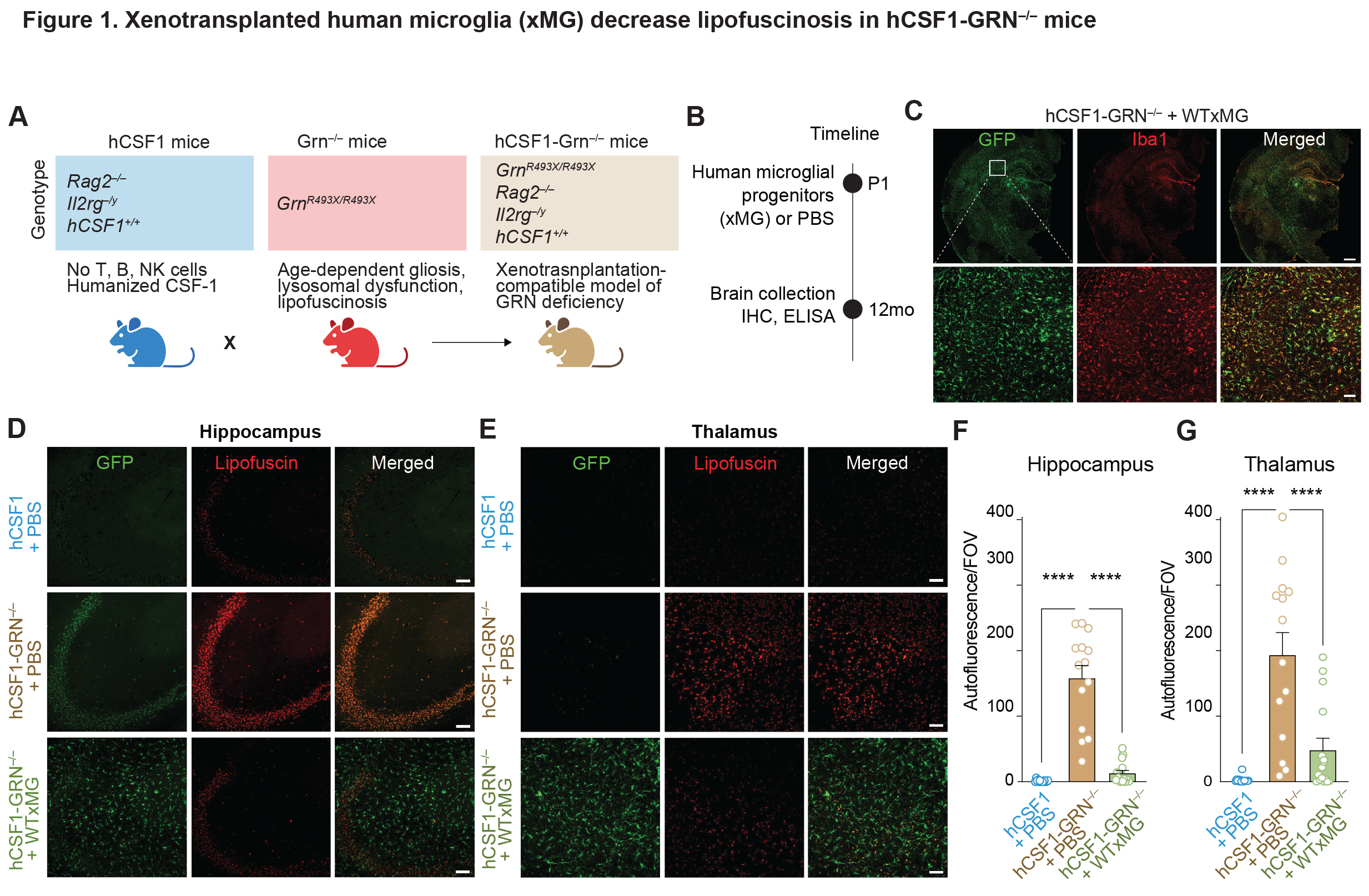
Transplantation of human iPSC-derived microglia ameliorates neuropathology and circuit dysfunction in progranulin-deficient mice
Molecular Neurodegeneration, 2026
We investigated the role of microglial signaling adaptor DAP12. Although Dap12 deletion reduced microglial tau processing and increased tau accumulation—most prominently in females—it paradoxically protected against tau-induced synapse loss, demyelination, and neuroinflammation. Single-nucleus RNA sequencing showed that Dap12 deletion prevented tau-driven transcriptional changes across microglia, neurons, and oligodendrocytes. CellChat analysis revealed that tau pathology induces SLIT2 signaling from excitatory neurons to oligodendrocytes, promoting myelin loss. Dap12 deletion suppressed neuronal Slit2 upregulation and mitigated demyelination. Spatial transcriptomics revealed a spatial correlation of SLIT2 expression and tau pathology in AD brain tissue. Thus, modulation of a DAP12-dependent neuronal SLIT2–oligodendrocyte pathway underlies resilience to tau toxicity, suggesting that selectively dampening detrimental DAP12 signaling may enhance brain resilience in AD.
To read more, click here.
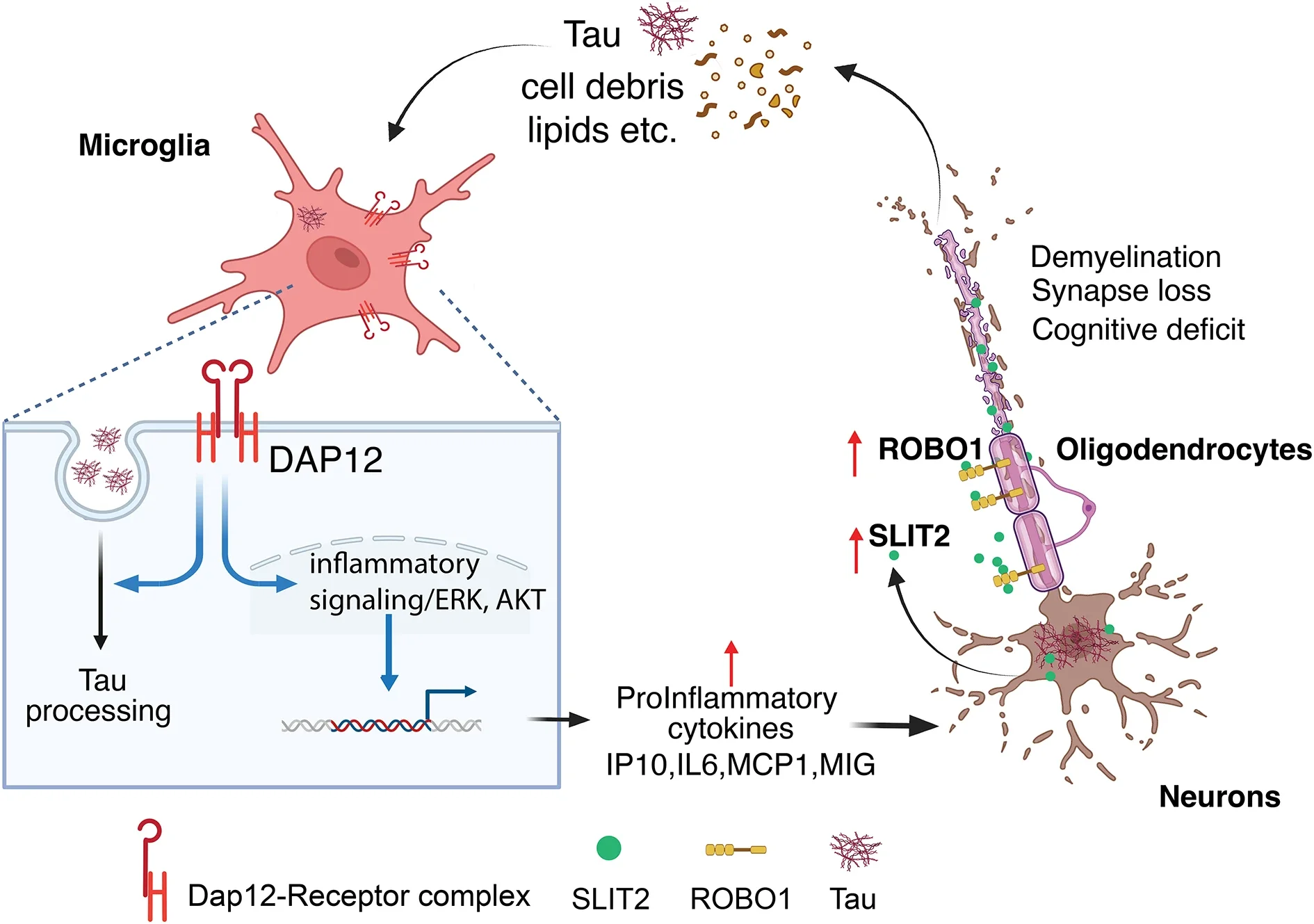
DAP12 deletion reduces neuronal SLIT2 and demyelination and enhances brain resilience in female tauopathy mice
Molecular Neurodegeneration, 2025
We investigated the role of microglial signaling adaptor DAP12. Although Dap12 deletion reduced microglial tau processing and increased tau accumulation—most prominently in females—it paradoxically protected against tau-induced synapse loss, demyelination, and neuroinflammation. Single-nucleus RNA sequencing showed that Dap12 deletion prevented tau-driven transcriptional changes across microglia, neurons, and oligodendrocytes. CellChat analysis revealed that tau pathology induces SLIT2 signaling from excitatory neurons to oligodendrocytes, promoting myelin loss. Dap12 deletion suppressed neuronal Slit2 upregulation and mitigated demyelination. Spatial transcriptomics revealed a spatial correlation of SLIT2 expression and tau pathology in AD brain tissue. Thus, modulation of a DAP12-dependent neuronal SLIT2–oligodendrocyte pathway underlies resilience to tau toxicity, suggesting that selectively dampening detrimental DAP12 signaling may enhance brain resilience in AD.
To read more, click here.
A CRISPRi/a platform in human iPSC-derived microglia uncovers regulators of disease states
Nature Neuroscience, 2022
Argyrophilic grain disease differs from other tauopathies by lacking tau acetylation
Acta Neuropathologica, 2013
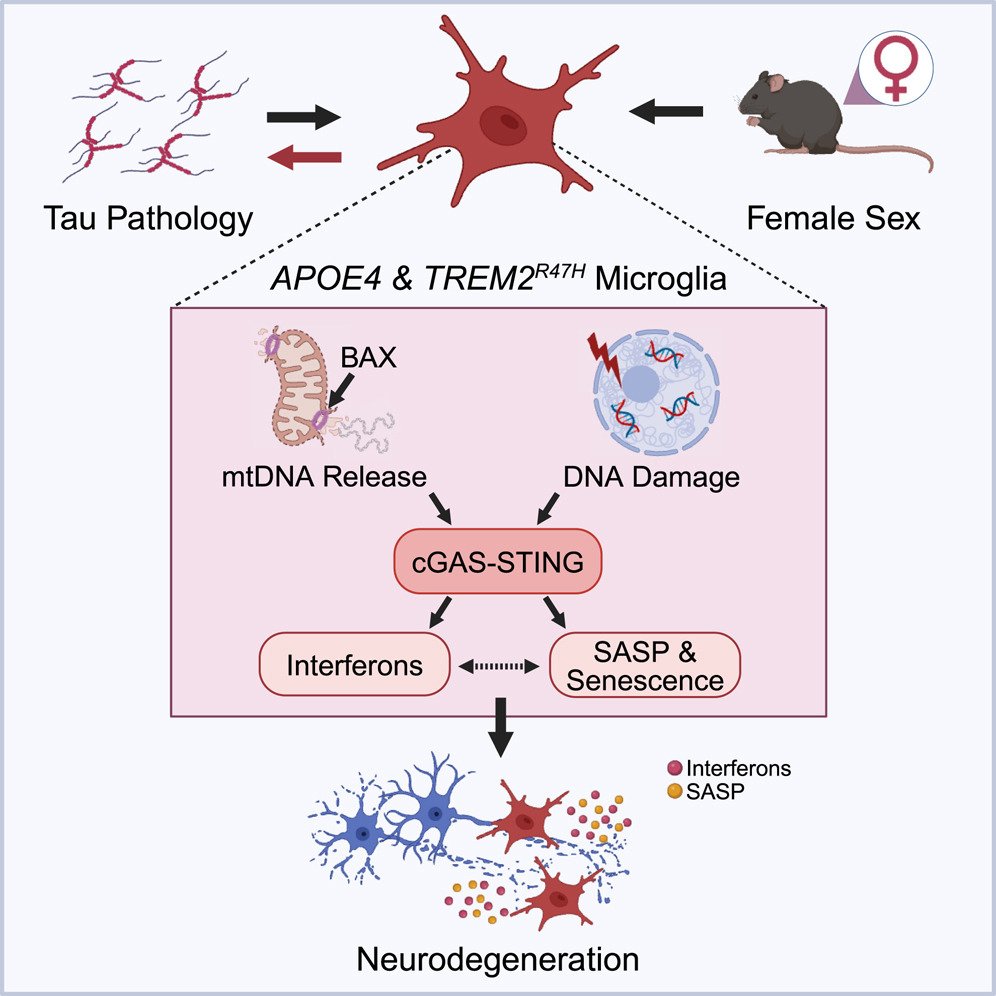
Tau activation of microglial cGAS–IFN reduces MEF2C-mediated cognitive resilience
Nature Neuroscience, 2023
Microglial NF-κB drives tau spreading and toxicity in a mouse model of tauopathy
Nature Communications, 2022
Microglial microRNAs mediate sex-specific responses to tau pathology
Nature Neuroscience, 2020