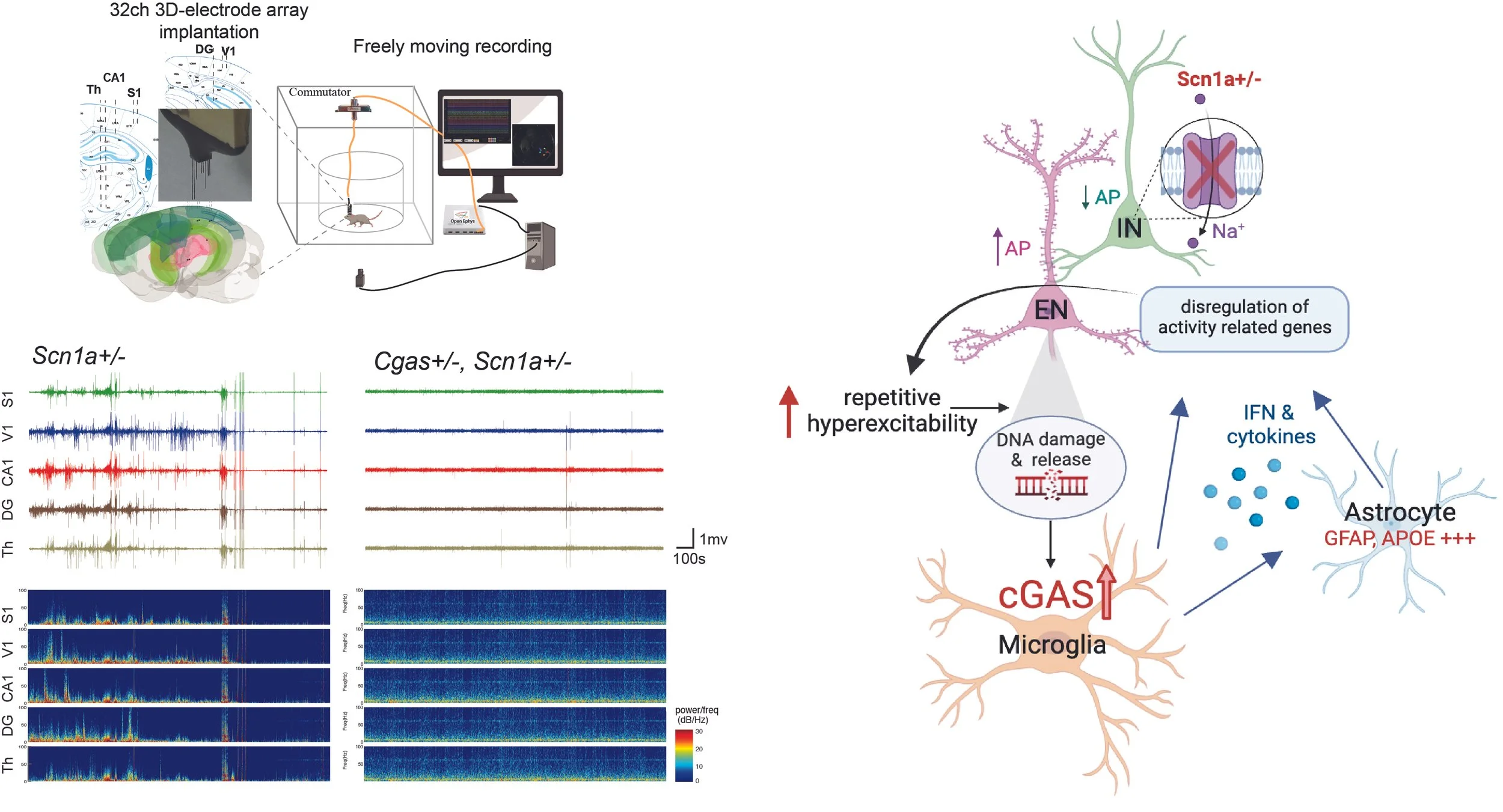
cGAS-mediated type I IFN signaling contributes to disease progression in drug-refractory epilepsy
Nature Neuroscience, 2026
Drug-refractory epilepsy (DRE) affects roughly one-third of epilepsy patients. We examined brain tissue from individuals with this condition and found robust activation of cGAS, a DNA sensor that triggers type I interferon signaling, along with widespread type-I IFN signatures in their microglia. We observed the same cGAS pathway activation in mouse models of Dravet syndrome, a genetic form of DRE. Notably, hyperexcitable neurons release DNA that directly activates microglial cGAS. When we genetically reduced or pharmacologically blocked cGAS in Dravet syndrome mice, seizures diminished, microglial inflammatory signatures normalized, and neuronal gene expression patterns returned toward healthy levels. These findings establish cGAS-mediated neuroimmune signaling as a driver of seizure pathology and identify this pathway as a compelling therapeutic target for drug-refractory epilepsy.
To read more, click here.
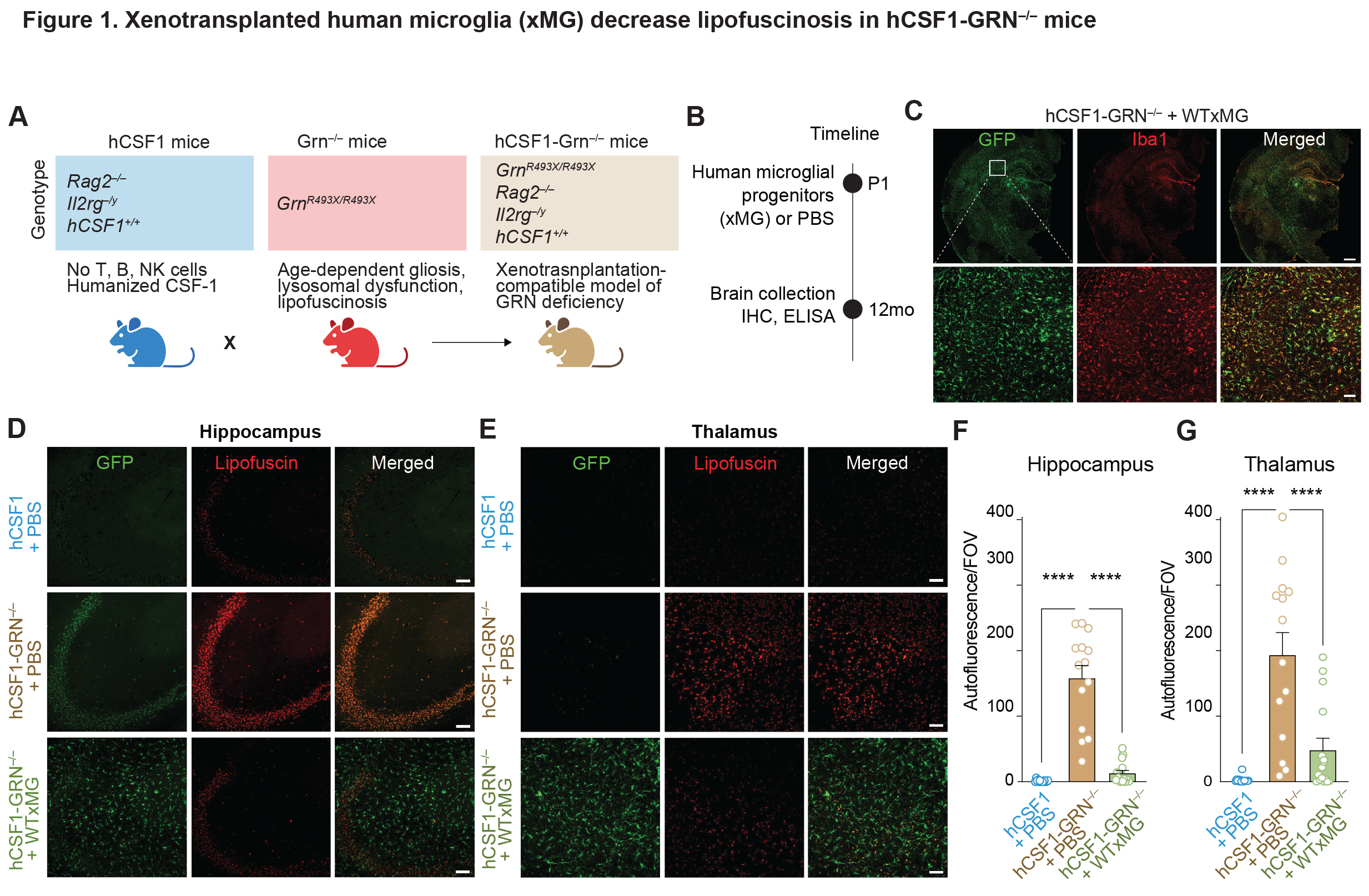
Transplantation of human iPSC-derived microglia ameliorates neuropathology and circuit dysfunction in progranulin-deficient mice
Molecular Neurodegeneration, 2026
We investigated the role of microglial signaling adaptor DAP12. Although Dap12 deletion reduced microglial tau processing and increased tau accumulation—most prominently in females—it paradoxically protected against tau-induced synapse loss, demyelination, and neuroinflammation. Single-nucleus RNA sequencing showed that Dap12 deletion prevented tau-driven transcriptional changes across microglia, neurons, and oligodendrocytes. CellChat analysis revealed that tau pathology induces SLIT2 signaling from excitatory neurons to oligodendrocytes, promoting myelin loss. Dap12 deletion suppressed neuronal Slit2 upregulation and mitigated demyelination. Spatial transcriptomics revealed a spatial correlation of SLIT2 expression and tau pathology in AD brain tissue. Thus, modulation of a DAP12-dependent neuronal SLIT2–oligodendrocyte pathway underlies resilience to tau toxicity, suggesting that selectively dampening detrimental DAP12 signaling may enhance brain resilience in AD.
To read more, click here.
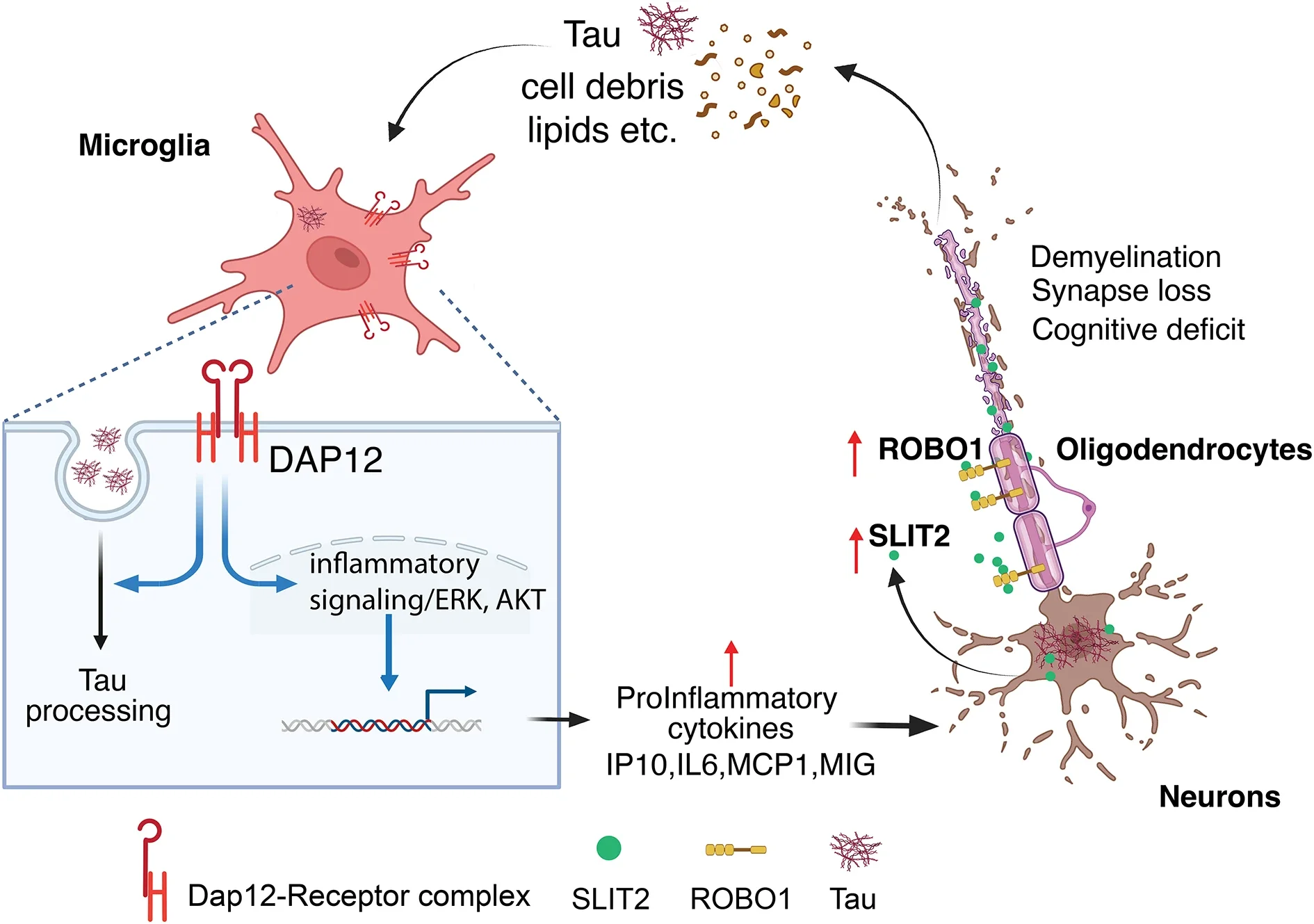
DAP12 deletion reduces neuronal SLIT2 and demyelination and enhances brain resilience in female tauopathy mice
Molecular Neurodegeneration, 2025
We investigated the role of microglial signaling adaptor DAP12. Although Dap12 deletion reduced microglial tau processing and increased tau accumulation—most prominently in females—it paradoxically protected against tau-induced synapse loss, demyelination, and neuroinflammation. Single-nucleus RNA sequencing showed that Dap12 deletion prevented tau-driven transcriptional changes across microglia, neurons, and oligodendrocytes. CellChat analysis revealed that tau pathology induces SLIT2 signaling from excitatory neurons to oligodendrocytes, promoting myelin loss. Dap12 deletion suppressed neuronal Slit2 upregulation and mitigated demyelination. Spatial transcriptomics revealed a spatial correlation of SLIT2 expression and tau pathology in AD brain tissue. Thus, modulation of a DAP12-dependent neuronal SLIT2–oligodendrocyte pathway underlies resilience to tau toxicity, suggesting that selectively dampening detrimental DAP12 signaling may enhance brain resilience in AD.
To read more, click here.

The R136S mutation in the APOE3 gene confers resilience against tau pathology via inhibition of the cGAS-STING-IFN pathway
Immunity, 2025
The Christchurch mutation (R136S) in the APOE3 (E3S/S) gene is associated with attenuated tau load and cognitive decline despite the presence of a causal PSEN1 mutation and high amyloid burden in the carrier. However, the molecular mechanisms enabling the E3S/S mutation to mitigate tau-induced neurodegeneration remain unclear. Here, we replaced mouse Apoe with wild-type human APOE3 or APOE3S/S on a tauopathy background. The R136S mutation decreased tau load and protected against tau-induced synaptic loss, myelin loss, and reduction in hippocampal theta and gamma power. Additionally, the R136S mutation reduced interferon responses to tau pathology in both mouse and human microglia, suppressing cGAS-STING pathway activation. Treating E3 tauopathy mice with a cGAS inhibitor protected against tau-induced synaptic loss and induced transcriptomic alterations similar to the R136S mutation across brain cell types. Thus, suppression of the microglial cGAS-STING-interferon (IFN) pathway plays a central role in mediating the protective effects of R136S against tauopathy.
To read more, click here.

Tlr7 drives sex differences in age- and Alzheimer’s disease–related demyelination
Science, 2024
Demyelination, a process observed in aging and age-related neurodegenerative disorders, has shown sex biases in both incidence and severity. Lopez-Lee et al. studied the mechanisms underpinning these sex-based differences in mice using single-nuclei transcriptomics, spatial transcriptomics, and functional analyses. The X-linked gene Tlr7 determined sex differences in demyelination, and its depletion or inhibition reduced sex differences and protected against demyelination in a mouse model of tau-mediated demyelination. These results contribute to elucidating the mechanisms mediating sex differences in neurological disorders. —Mattia Maroso (Editor’s summary)
To read more, click here.
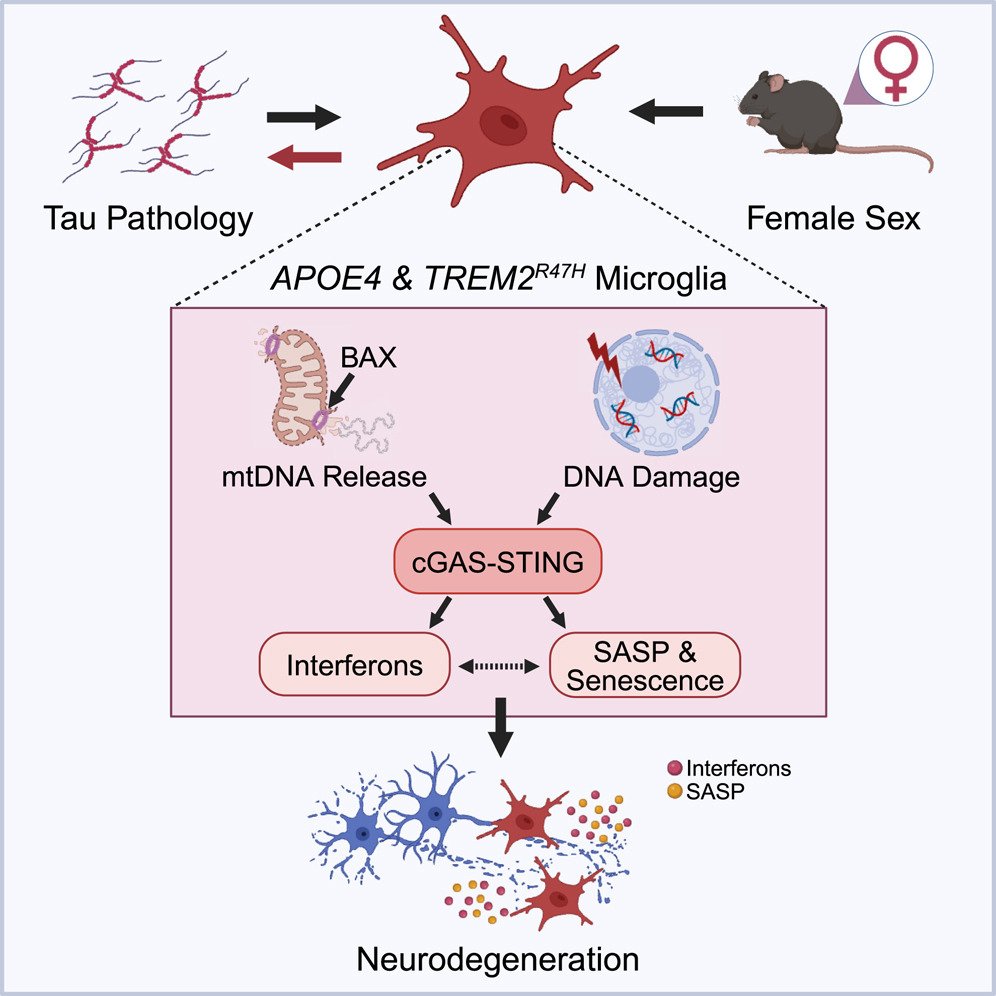
Alzheimer’s disease-linked risk alleles elevate microglial cGAS-associated senescence and neurodegeneration in a tauopathy model
Neuron, 2024
The strongest risk factors for late-onset sporadic Alzheimer’s disease (AD) include the ε4 allele of apolipoprotein E (APOE), the R47H variant of triggering receptor expressed on myeloid cells 2 (TREM2), and female sex. Here, we combine APOE4 and TREM2R47H (R47H) in female P301S tauopathy mice to identify the pathways activated when AD risk is the strongest, thereby highlighting detrimental disease mechanisms. We find that R47H induces neurodegeneration in 9- to 10-month-old female APOE4 tauopathy mice. The combination of APOE4 and R47H (APOE4-R47H) worsened hyperphosphorylated tau pathology in the frontal cortex and amplified tauopathy-induced microglial cyclic guanosine monophosphate (GMP)-AMP synthase (cGAS)-stimulator of interferon genes (STING) signaling and downstream interferon response. APOE4-R47H microglia displayed cGAS- and BAX-dependent upregulation of senescence, showing association between neurotoxic signatures and implicating mitochondrial permeabilization in pathogenesis. By uncovering pathways enhanced by the strongest AD risk factors, our study points to cGAS-STING signaling and associated microglial senescence as potential drivers of AD risk. To read more, see here.

Cellular and pathological functions of tau
Nat Rev Mol Cell Biol, 2024
Tau protein is involved in various cellular processes, including having a canonical role in binding and stabilization of microtubules in neurons. Tauopathies are neurodegenerative diseases marked by the abnormal accumulation of tau protein aggregates in neurons, as seen, for example, in conditions such as frontotemporal dementia and Alzheimer disease. Mutations in tau coding regions or that disrupt tau mRNA splicing, tau post-translational modifications and cellular stress factors (such as oxidative stress and inflammation) increase the tendency of tau to aggregate and interfere with its clearance. Pathological tau is strongly implicated in the progression of neurodegenerative diseases, and the propagation of tau aggregates is associated with disease severity. Recent technological advancements, including cryo-electron microscopy and disease models derived from human induced pluripotent stem cells, have increased our understanding of tau-related pathology in neurodegenerative conditions. Substantial progress has been made in deciphering tau aggregate structures and the molecular mechanisms that underlie protein aggregation and toxicity. In this Review, we discuss recent insights into the diverse cellular functions of tau and the pathology of tau inclusions and explore the potential for therapeutic interventions. To read more, see here.

Anti-acetylated-tau immunotherapy is neuroprotective in tauopathy and brain injury
Molecular Neurodegeneration, 2024
In the latest study from the Gan Lab, published in Molecular Neurodegeneration, Parra Bravo, Krukowski, and Barker et al. report two newly-generated anti-acetylated-tau-K174 antibodies that effectively mitigate neurobehavioral impairments and reduce pathology in PS19 mice— alone and in conjunction with traumatic brain injury (TBI).
The collaborative study was led by Celeste Parra Bravo from the Gan laboratory, Dr. Karen Krukowski from Dr. Susanna Rosi’s group (UCSF), and Sarah Barker from Dr. Andrew Pieper’s group (University Hospitals Cleveland Medical Center), with Dr. Rosi, Dr. Xu Chen (UCSD), and Dr. Li Gan as senior investigators.
Immunotherapy of mice harboring the P301S tau mutation (PS19) with anti-ac-tauK174 antibody rescued neurobehavioral impairments, and ameliorated neuropathology and neurodegeneration. Ac-tauK174 increased significantly in human plasma 24 hr after TBI, and anti-ac-tauK174 treatment of PS19 mice blocked TBI-induced neurodegeneration, preserved memory functions, and rescued alterations of microglial and oligodendrocyte transcriptomic states.
Read the full paper HERE.
Human iPSC 4R tauopathy model uncovers modifiers of tau propagation
Cell, 2024
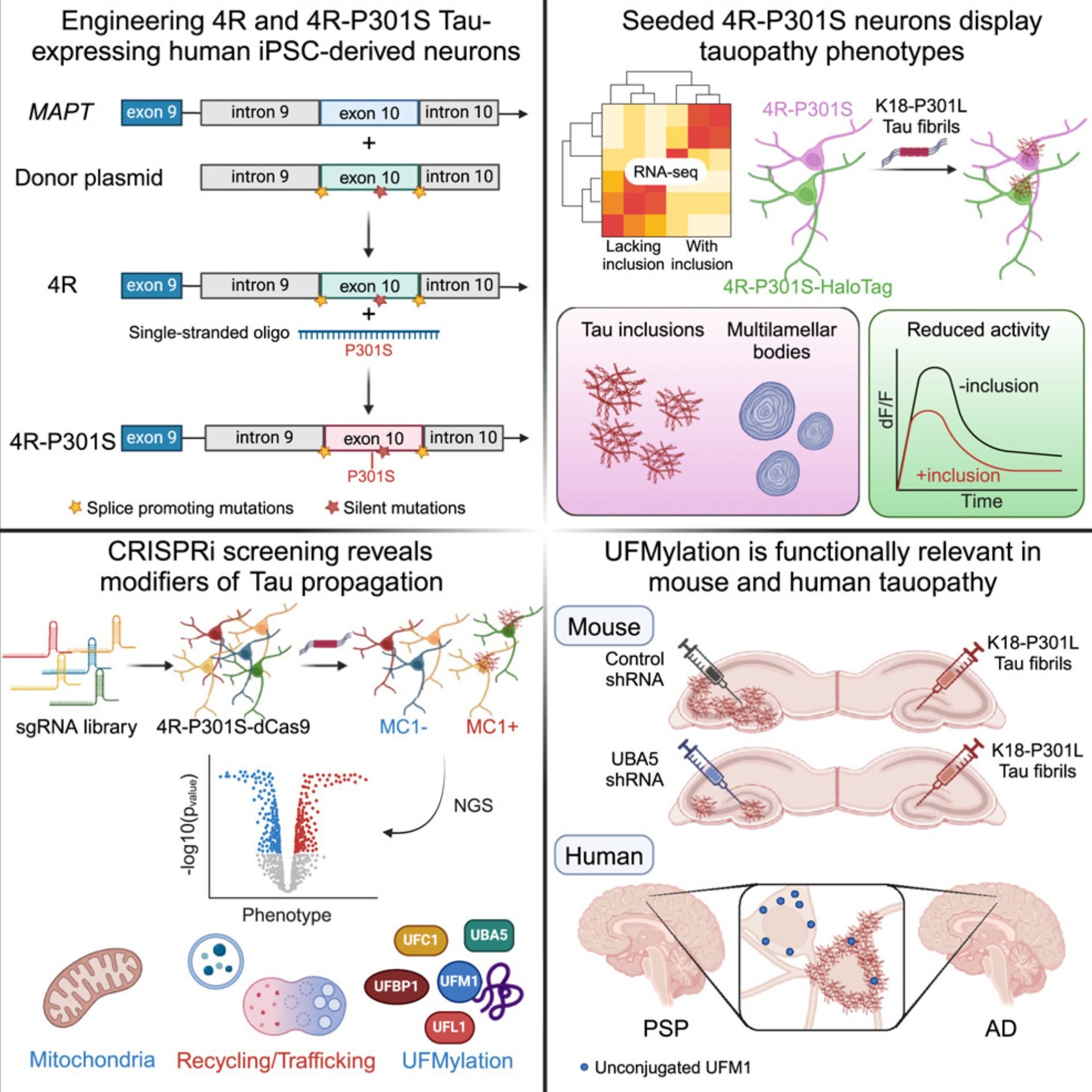
Tauopathies are age-associated neurodegenerative diseases whose mechanistic underpinnings remain elusive, partially due to a lack of appropriate human models. Here, we engineered human induced pluripotent stem cell (hiPSC)-derived neuronal lines to express 4R Tau and 4R Tau carrying the P301S MAPT mutation when differentiated into neurons. 4R-P301S neurons display progressive Tau inclusions upon seeding with Tau fibrils and recapitulate features of tauopathy phenotypes including shared transcriptomic signatures, autophagic body accumulation, and reduced neuronal activity. A CRISPRi screen of genes associated with Tau pathobiology identified over 500 genetic modifiers of seeding-induced Tau propagation, including retromer VPS29 and genes in the UFMylation cascade. In progressive supranuclear palsy (PSP) and Alzheimer’s Disease (AD) brains, the UFMylation cascade is altered in neurofibrillary-tangle-bearing neurons. Inhibiting the UFMylation cascade in vitro and in vivo suppressed seeding-induced Tau propagation. This model provides a robust platform to identify novel therapeutic strategies for 4R tauopathy.